
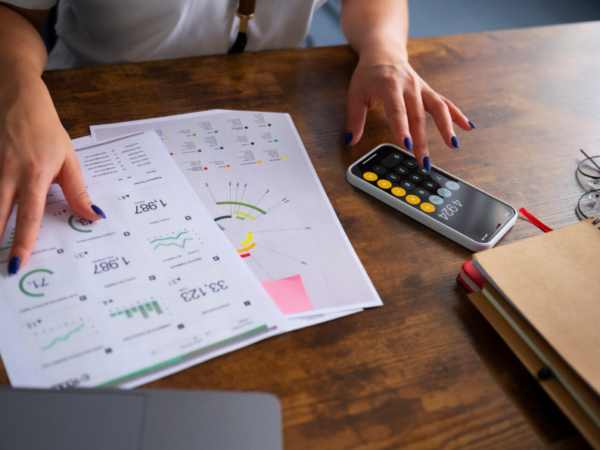
Understanding how values grow over time is an essential skill in both personal and professional settings. Whether you are tracking financial growth, analyzing business performance, or comparing price changes, knowing how to work with percentages is very useful. Many people rely on tools like a percentage increase calculator to simplify this process and get quick results without manual effort.
A percentage increase shows how much a value has grown compared to its original amount. It helps you measure change in a clear and standardized way. For example, if the price of a product rises from 100 to 120, the increase is 20. To express this as a percentage, you compare the increase to the original value. This makes it easier to understand the scale of growth rather than just looking at the raw difference.
The formula to calculate a percentage increase is simple and widely used. First, subtract the original value from the new value to find the difference. Then divide that difference by the original value. Finally, multiply the result by 100 to convert it into a percentage. This method works for various applications including finance, education, and everyday problem solving.
Percentage increase is commonly used in financial planning. For instance, if your salary increases over time, calculating the percentage growth helps you understand how much your income has improved. Similarly, investors use percentage increase to evaluate the performance of stocks, mutual funds, or other assets. Even small percentage changes can make a big difference when applied over long periods.
In business, percentage increase plays a key role in measuring success. Companies track sales growth, customer acquisition, and revenue changes using percentage calculations. This allows them to identify trends and make informed decisions. For example, if a company sees a steady percentage increase in sales each month, it may decide to expand its operations or invest in new opportunities.
Education is another area where percentage increase is important. Students may track their improvement in test scores over time. By calculating the percentage increase, they can clearly see how much progress they have made. This can be motivating and help them set realistic goals for future performance.
Shopping is a practical example where understanding percentage increase can be helpful. While discounts are more common, price increases also occur due to inflation or demand. Knowing how to calculate these changes helps you make better purchasing decisions and manage your budget more effectively.
Sometimes, people find manual calculations confusing, especially when dealing with large numbers or multiple steps. This is where digital tools become useful. They provide quick and accurate results, saving time and reducing the chance of errors. However, it is still important to understand the basic concept so that you can interpret the results correctly.
Another benefit of learning percentage increase is improved analytical thinking. When you understand how values change relative to each other, you can make more informed decisions. This skill is valuable in many areas of life, from managing personal finances to evaluating business opportunities.
Practice is essential for mastering percentage calculations. Start with simple examples and gradually move to more complex scenarios. Over time, you will become more confident and efficient in solving these problems. This will not only improve your mathematical skills but also enhance your ability to handle real world situations.
In conclusion, understanding how to calculate percentage increase is a valuable skill that can be applied in many aspects of life. From tracking financial growth to analyzing performance, it provides a clear way to measure change. While tools can make the process easier, having a strong grasp of the concept ensures accuracy and confidence whenever you need to calculate percentage increase in any situation.